
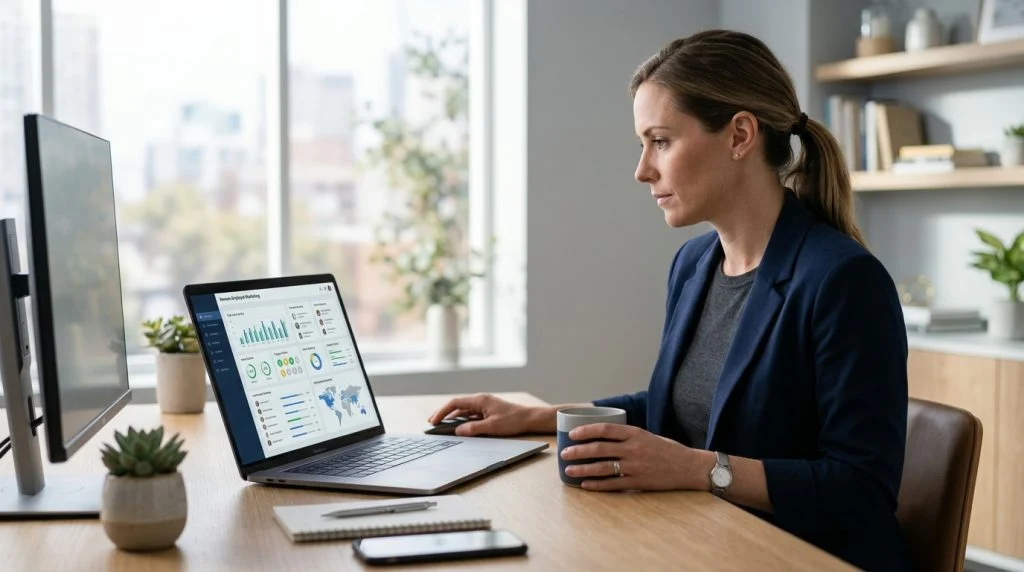
However, effective monitoring is not about watching every move an employee makes. It is about understanding work patterns, improving coordination, and creating an environment where people can perform their responsibilities with greater confidence.
Managing a remote team is not simply about assigning tasks and checking whether deadlines are being met. When employees work from different locations, managers have fewer opportunities to understand daily workflows, identify problems early, and provide timely support. A project may appear to be moving forward while small communication gaps or inefficient processes quietly slow everything down. This is where best employee monitoring software can help businesses gain a clearer picture of how work is progressing without relying entirely on frequent meetings or manual reports.
Why Managing Remote Employees Requires a Different Approach
In a traditional office, managers can often notice when someone needs assistance simply by observing everyday interactions. Remote teams do not have that advantage. Employees might be working across different time zones, handling several projects simultaneously, or communicating through multiple applications.
These conditions make it harder to understand where delays are coming from. For example, a designer might spend additional time revising a project because the original instructions were unclear. A customer support representative might appear less active because they are handling telephone enquiries rather than working on a computer.
Without proper context, managers can easily misunderstand these situations.
A structured monitoring approach helps connect daily activity with actual business responsibilities. Instead of making assumptions, managers can use relevant information to understand workloads, review progress, and identify areas where additional support may be needed.
What Should Employee Monitoring Software Actually Do?
Not every monitoring platform offers the same capabilities. Some focus primarily on tracking working hours, while others provide productivity reports, application usage information, attendance records, and visual activity monitoring.
The right choice depends on the size of the organisation, the nature of its work, and the level of visibility managers genuinely need.
Here are some useful capabilities to consider:
| Feature | How It Helps Remote Teams |
| Time tracking | Provides a clearer record of working hours and attendance. |
| Productivity reports | Helps identify work patterns and potential workflow problems. |
| Application monitoring | Shows how employees use work-related tools and applications. |
| Activity history | Helps managers understand how work progresses throughout the day. |
| Screenshot monitoring | Provides visual context when reviewing specific work activities. |
| Project tracking | Helps connect working time with assigned tasks and projects. |
These features should support better decisions rather than become a replacement for communication. For example, if reports show that a particular task regularly takes longer than expected, managers can investigate whether the workload is unrealistic or whether employees need additional training.
Setting Clear Expectations Before Introducing Monitoring
One mistake businesses sometimes make is introducing monitoring software without explaining why it is being used. Employees may interpret the decision as a sign that management does not trust them.
That reaction can create unnecessary tension, even when the original intention is simply to improve productivity.
Before introducing a monitoring system, managers should explain what information will be collected, who can access it, and how the information will be used. Employees should also understand which activities are considered work-related and whether monitoring continues outside scheduled working hours.
Clear expectations make a considerable difference.
For instance, a company managing a remote customer support department might monitor attendance and work-related application usage. However, measuring a support representative’s performance should also involve customer satisfaction, response quality, and the complexity of enquiries handled.
The objective is to create a fair system where employees understand how their performance is evaluated.
How Monitoring Helps Identify Everyday Productivity Problems
Productivity problems are not always caused by a lack of effort. Sometimes, the real issue is an inefficient process that makes ordinary tasks unnecessarily complicated.
Consider a marketing team that spends several hours each week preparing campaign reports. If employees are switching between spreadsheets, project management platforms, and communication tools repeatedly, the problem may be the workflow itself rather than individual performance.
Monitoring information can help managers recognise these patterns.
For example, application usage reports might reveal that employees spend considerable time moving between different tools. Managers could respond by simplifying the reporting process or introducing a shared workspace.
Other situations may require different solutions:
- Frequent inactivity: Check whether employees are attending meetings, handling offline responsibilities, or experiencing workload interruptions.
- Repeated application switching: Review whether the team needs a more organised software setup.
- Missed deadlines: Examine task distribution and identify unrealistic schedules.
- Uneven workloads: Redistribute responsibilities before a small number of employees become overwhelmed.
The important point is to investigate the reason behind a pattern before making decisions about individual performance.
Choosing the Right Monitoring Approach for Different Teams
A monitoring setup that works well for a software development company may not be appropriate for a customer service department. Different roles involve different responsibilities, so businesses should avoid using identical performance measurements across the entire organisation.
The following comparison provides a practical starting point.
| Team Type | Useful Monitoring Priorities | What Managers Should Evaluate |
| Customer Support | Attendance, working hours, application usage | Response quality and customer satisfaction |
| Software Development | Project tracking, activity history, time records | Code quality and task completion |
| Marketing | Application usage, project progress, time tracking | Campaign performance and deadlines |
| Data Entry | Working hours, task activity, productivity reports | Accuracy and completed records |
| Virtual Assistants | Time tracking, attendance, project monitoring | Reliability and assigned responsibilities |
This approach makes performance reviews more meaningful. An employee should be evaluated according to the actual requirements of their position rather than a single activity score.
Protecting Employee Privacy While Maintaining Visibility
Privacy deserves serious attention whenever a business collects information about employee activity. Monitoring can provide useful operational insights, but excessive data collection may damage workplace relationships and create legal complications.
Businesses should establish clear monitoring policies before deploying any software. These policies should explain what is recorded, why the information is necessary, how long records are retained, and which individuals are authorised to review them.
There are several practical ways to maintain an appropriate balance:
Collect relevant information: Only monitor data that supports a legitimate business purpose. Collecting unnecessary information increases privacy risks without necessarily improving management decisions.
Be transparent: Inform employees about monitoring practices and explain how the system works. Hidden expectations can create confusion and reduce trust.
Limit access: Not every manager needs access to every employee record. Permissions should reflect actual job responsibilities.
Follow applicable regulations: Businesses should review relevant employment, data protection, and privacy laws before implementing monitoring tools. Requirements can differ depending on where employees and organisations operate.
A transparent approach helps employees understand that monitoring is intended to improve workplace operations rather than interfere with their personal lives.
Making Monitoring Reports Useful for Better Decisions
Collecting information is only the first step. The real value comes from understanding what the reports indicate and deciding whether any changes are necessary.
For example, a manager might notice that one department consistently records longer working hours than another. Rather than immediately treating this as a productivity issue, they could examine the number of assigned projects, staffing levels, and task complexity.
Similarly, an increase in idle time does not automatically indicate poor performance. Employees may be attending offline meetings, planning their next assignments, or waiting for information from another department.
A sensible review process should consider several factors together:
- Compare activity over a reasonable period instead of judging performance from a single day.
- Consider the employee’s responsibilities and workload.
- Discuss unusual patterns directly with the people involved.
- Identify practical changes that could improve the workflow.
- Review the results after implementing those changes.
This process turns monitoring reports into a useful management resource instead of a collection of numbers that nobody knows how to interpret.
Common Mistakes Businesses Should Avoid
Even a capable monitoring platform cannot solve management problems automatically. The way an organisation introduces and uses the technology matters just as much as the software itself.
One common mistake is treating computer activity as a complete measurement of productivity. Some valuable work happens away from a keyboard, including meetings, planning, research, and communication with clients.
Another issue is setting unrealistic expectations. Requiring employees to remain active every minute of the working day can encourage unnecessary computer activity rather than meaningful results.
Businesses should also avoid reviewing reports without considering the surrounding circumstances. A temporary drop in activity might be related to technical problems, changing responsibilities, or an unusually demanding assignment.
Monitoring works best when combined with regular feedback, reasonable targets, and an understanding of how each department operates.
Final Thoughts
Managing remote employees requires a balance between accountability and trust. Businesses need enough information to understand how work is progressing, but employees also need the independence to complete their responsibilities without unnecessary interference.
A well-planned monitoring system can make everyday management easier by providing visibility into working hours, application usage, productivity patterns, and project activity. More importantly, it can help managers identify problems that would otherwise remain unnoticed.
The most effective approach is to use monitoring information as a starting point for better conversations and smarter decisions. When technology supports clear expectations, fair performance reviews, and respectful workplace policies, remote teams have a much better opportunity to work efficiently and achieve consistent results.
 Michael Carter